Category: Banking

Explore online banking, checking accounts, savings accounts, digital banks, money transfers, and financial services.

  • High-Yield Checking Accounts: Earn More on Every Dollar

    High-Yield Checking Accounts: Earn More on Every Dollar

    What Is a High-Yield Checking Account?

    Most Americans earn next to nothing on their everyday checking balance. According to the FDIC, the national average interest rate on traditional checking accounts sits at just 0.08% APY — meaning a $5,000 balance earns you about $4 a year. That’s not a typo.

    High-yield checking accounts flip that equation. These are federally insured bank or credit union accounts that pay significantly higher interest — sometimes 3% to 6% APY or more — on your everyday cash balance, as long as you meet certain monthly requirements.

    Unlike a savings account or CD, you still get full debit card access, direct deposit, and ATM privileges. You’re not locking your money away. You’re just earning considerably more on it.

    These accounts go by several names: rewards checking accounts, kasasa accounts, or high-interest checking accounts. The mechanics differ slightly by institution, but the core promise is the same — earn more without sacrificing daily access to your funds.

    How High-Yield Checking Accounts Work

    Here’s the part most bank marketing glosses over: high-yield checking accounts typically come with qualification requirements you must meet each monthly cycle to earn the advertised rate.

    Common requirements include:

    • Minimum number of debit card transactions per month — usually 10 to 15 purchases
    • At least one direct deposit or ACH transaction per month
    • Enrollment in e-statements (paperless billing)
    • Logging into online or mobile banking at least once per cycle

    If you meet all requirements, you earn the full rate — but only up to a balance cap, which typically ranges from $10,000 to $25,000. Balances above that cap usually earn a much lower rate (often 0.05%–0.25%).

    If you don’t meet the requirements in a given month, most banks drop your rate to a minimal fallback rate for that cycle — no penalty, no fee, just a lower return. You can qualify again the following month.

    Think of it like a rewards credit card: you get the benefits when you use the product as intended.

    Key Benefits of High-Yield Checking Accounts

    The most immediate benefit is obvious — you earn real money on cash you’d hold anyway. But there are several other advantages worth understanding.

    1. Liquidity Without Sacrifice

    High-yield savings accounts (HYSAs) generally offer comparable or better rates, but they’re governed by withdrawal limitations. High-yield checking keeps your money fully liquid — write checks, use your debit card, pay bills directly, no restrictions.

    2. ATM Fee Reimbursements

    Many high-yield checking accounts offered by online banks or credit unions include unlimited ATM fee reimbursements nationwide, sometimes globally. If you regularly use out-of-network ATMs, this alone could save you $50–$150 per year.

    3. No Monthly Fees (When You Qualify)

    The majority of these accounts carry no monthly maintenance fees, provided you meet the qualification thresholds. That’s a meaningful advantage over many traditional bank accounts that charge $12–$25/month.

    4. FDIC or NCUA Insurance

    Like any standard bank account, your deposits at FDIC-insured banks are protected up to $250,000 per depositor, per institution. Credit union accounts carry equivalent protection through the NCUA. Your money is not at additional risk just because the rate is higher.

    5. Real Dollar Impact

    Let’s put numbers to it. A $15,000 balance in a traditional checking account at 0.08% APY earns roughly $12 per year. That same balance in a qualifying high-yield checking account at 4% APY earns $600 per year. Over five years, that’s a $2,940 difference — just for switching where you hold cash you already needed.

    How to Get Started: Step-by-Step

    Opening a high-yield checking account is straightforward. Here’s how to do it the right way.

    1. Audit your current spending habits. Check how many debit transactions you make monthly and whether you already use direct deposit. If you currently make fewer than 10 debit purchases per month, a high-yield checking account may require a behavior change — or may not be worth chasing.
    2. Compare rates and balance caps. Look specifically at the APY, the qualifying balance cap, the debit transaction requirement, and whether ATM fees are reimbursed. Resources like Bankrate, DepositAccounts.com, or NerdWallet maintain updated comparison lists.
    3. Check institution type. The highest rates are often found at smaller community banks and credit unions, not national banks. Many are available nationwide through online applications, regardless of where you live.
    4. Open the account online. You’ll need a Social Security number, government-issued ID, and an existing account number to fund the opening deposit — typically $25–$100 to get started.
    5. Set up direct deposit and e-statements immediately. Don’t wait until the end of the month. Get your qualifications locked in from day one of the cycle.
    6. Track your monthly qualifications. Most banks show your qualification progress in the mobile app or online dashboard. Make it a habit to check mid-month — you don’t want to miss 4% APY because you were one debit purchase short.

    Costs, Fees, and Risks You Need to Know

    High-yield checking accounts are generally low-risk, but there are real downsides to understand before opening one.

    Rate Variability

    Unlike a CD, these rates are not locked in. Banks can and do adjust rates — sometimes significantly — especially when the Federal Reserve changes its benchmark rate. What’s 5% today could be 2.5% in 18 months. Always have a fallback plan.

    Behavior-Dependent Returns

    If your lifestyle doesn’t naturally generate 10–15 debit card swipes per month, you may find yourself making unnecessary small purchases just to qualify. That defeats the purpose — spending $50 on things you don’t need to earn $30 in interest is a net loss.

    Balance Cap Limitations

    If you’re sitting on $50,000 in cash, only $15,000–$25,000 of it earns the premium rate. The rest earns almost nothing. In that scenario, pairing a high-yield checking account with a high-yield savings account or money market account makes more sense than holding everything in one place.

    Smaller Institution Risk

    Most top-tier rates come from lesser-known banks or credit unions. While FDIC/NCUA insurance protects your deposits, smaller institutions may have less robust mobile apps, fewer branch locations, or less responsive customer service. Read reviews before committing.

    Common Mistakes to Avoid

    Opening a high-yield checking account is easy. Optimizing one takes a bit more intention. Here are the most common errors people make.

    Mistake #1: Ignoring the Qualification Requirements Until Week Four

    Many people open the account, forget about the requirements, and scramble at month-end. If you miss the debit transaction threshold by one purchase, you lose the entire month’s premium interest — potentially $40–$60 on a $15,000 balance. Set a calendar reminder mid-month to verify your status.

    Mistake #2: Parking More Than the Cap

    Leaving $40,000 in an account with a $15,000 balance cap means $25,000 is earning 0.05%. That’s a significant opportunity cost. Split your excess cash into a high-yield savings account or money market account where it can work harder. You can read more about comparing these options in our guide to CD laddering strategies and how to avoid unnecessary bank fees.

    Mistake #3: Not Reading the Fine Print on ATM Reimbursements

    Some banks cap ATM reimbursements at $10–$25 per month or only reimburse domestic ATM fees. If you travel internationally or use ATMs frequently, verify exact terms before assuming full reimbursement.

    Mistake #4: Ignoring Rate Changes

    Banks send rate-change notices buried in email newsletters or secure message centers. Check your account’s APY quarterly. If your rate has quietly dropped from 4% to 1.5%, it may be time to shop competitors. Loyalty to a low rate helps no one.

    Mistake #5: Using It as Your Only Cash Account

    High-yield checking works best as part of a broader cash management strategy — not as a standalone solution for all your liquid assets. Pair it with an emergency fund in a high-yield savings account and, if applicable, a money market account for larger cash reserves.

    Alternatives to Consider

    High-yield checking isn’t the right fit for every situation. Here are three alternatives worth evaluating.

    High-Yield Savings Accounts (HYSAs)

    As of mid-2026, top HYSAs from online banks offer APYs in the 4%–5% range with no transaction requirements. The downside: these are savings accounts, not designed for daily transactions. If you don’t need frequent access to funds, a HYSA may actually offer a better rate with less behavioral overhead. Best for: emergency funds and short-term savings goals.

    Money Market Accounts

    Money market accounts (MMAs) often combine higher interest rates with limited check-writing and debit card privileges. They typically don’t have monthly transaction requirements, but may carry minimum balance requirements of $1,000–$10,000. Best for: larger cash reserves where you need occasional access but not daily debit card use.

    Cash Management Accounts

    Offered by brokerages like Fidelity and Charles Schwab, cash management accounts sweep your uninvested cash into interest-bearing vehicles automatically. Schwab’s Investor Checking, for example, offers unlimited worldwide ATM fee reimbursements with no minimum balance. Best for: investors who want to consolidate banking and brokerage in one place.

    Frequently Asked Questions

    Are high-yield checking accounts safe?

    Yes — as long as the institution is FDIC-insured (banks) or NCUA-insured (credit unions). Your deposits are protected up to $250,000 per depositor, per institution. The higher interest rate does not introduce additional risk to your principal.

    Do high-yield checking accounts affect my credit score?

    Opening a checking account typically triggers only a soft credit inquiry (or none at all), which does not impact your credit score. Unlike credit cards or loans, checking accounts are not reported to credit bureaus unless they’re sent to collections for a negative balance.

    What happens if I don’t meet the monthly requirements?

    In most cases, your account simply earns the fallback rate (often 0.01%–0.25%) for that cycle. There’s no penalty or fee. You automatically re-enter the qualification period the following month. It’s not a permanent consequence — just a missed opportunity for that statement cycle.

    Can I have a high-yield checking account at a different bank than my primary bank?

    Absolutely. Many people maintain a primary checking account at a large national bank for convenience and a separate high-yield checking account at an online bank or credit union for the rate. ACH transfers between accounts are free and typically settle within 1–2 business days.

    Are the debit card swipes a security concern?

    Using your debit card more frequently does slightly increase transaction exposure compared to rarely using it. Mitigate this by using your card at trusted merchants, enabling real-time transaction alerts, and reviewing your statement regularly. For tips on protecting your accounts, see our guide on credit card and debit card security features.

    Final Takeaways

    High-yield checking accounts are one of the most underutilized tools in personal cash management. For working adults who already use a debit card regularly and have a direct deposit in place, the qualification requirements are often already being met — they’re just not being rewarded for it at their current bank.

    The math is compelling: earning 4%–6% APY on $10,000–$25,000 in everyday cash generates hundreds of dollars annually with zero investment risk and full liquidity. The key is choosing an institution with a competitive rate, a reasonable balance cap, and terms that match how you actually bank.

    Compare at least three to five options before opening an account, pay attention to rate changes on a quarterly basis, and integrate the account into a broader cash management strategy that includes a dedicated savings vehicle for funds beyond the cap.

    Take one hour this week to compare current high-yield checking rates at your local credit unions and top online banks. The difference between 0.08% and 4% APY is not a small detail — it’s real money left on the table every month you wait.

    This article is for educational purposes only and does not constitute financial, tax, or investment advice. Always consult a licensed financial advisor, CPA, or attorney before making financial decisions.

  • CD Laddering Strategy: How to Maximize Your Bank Returns

    CD Laddering Strategy: How to Maximize Your Bank Returns

    Introduction

    One simple banking move can help you earn more interest, stay flexible, and never get stuck when rates change — here’s how CD laddering works and why thousands of Americans use it.

    According to the Federal Reserve’s 2025 Consumer Finance Survey, nearly 45% of American households keep a significant portion of their savings in low-interest checking or basic savings accounts — missing out on hundreds of dollars in potential annual interest. If you’re one of them, a CD laddering strategy might be exactly what your financial plan is missing.

    A CD ladder is a structured approach to investing in multiple Certificates of Deposit (CDs) with staggered maturity dates. Instead of locking all your money into one CD for a long period — or leaving it in a low-yield account — you spread it across several CDs that mature at different times. This gives you the best of both worlds: higher interest rates and regular access to your money.

    In this guide, you’ll learn exactly how CD laddering works, the specific steps to build one, the real costs and risks to watch for, and common mistakes that can cost you hundreds of dollars. Whether you have $5,000 or $100,000 to work with, this strategy can help your savings grow smarter.

    What Is CD Laddering and How Does It Work?

    A Certificate of Deposit (CD) is a savings product offered by banks and credit unions. You deposit a fixed sum of money for a specific term — typically ranging from 3 months to 5 years — and in return, the bank pays you a guaranteed interest rate. When the term ends (the maturity date), you get your original deposit back plus the accumulated interest.

    The catch? If you need your money before the CD matures, you typically pay an early withdrawal penalty, which can wipe out several months of interest earnings.

    CD laddering solves this problem by splitting your savings across multiple CDs with different maturity dates. Here’s a simple example:

    Instead of depositing $25,000 into a single 5-year CD, you divide it into five $5,000 portions and place each in a CD with a different term:

    • $5,000 in a 1-year CD
    • $5,000 in a 2-year CD
    • $5,000 in a 3-year CD
    • $5,000 in a 4-year CD
    • $5,000 in a 5-year CD

    Each year, one CD matures. At that point, you can either use the funds if you need them — or reinvest into a new 5-year CD to keep the ladder going. Over time, all your CDs roll into 5-year terms (which typically pay the highest rates), but you always have one maturing every 12 months.

    This strategy is most relevant to US adults who want higher returns than a standard savings account, prefer FDIC-insured safety over market risk, and want to maintain periodic liquidity without penalties.

    Key Benefits of CD Laddering

    According to Bankrate’s 2026 rate data, the average national 5-year CD rate sits significantly higher than the average regular savings account rate of around 0.46% APY — making the difference between a basic savings account and a well-structured CD ladder potentially hundreds or even thousands of dollars annually, depending on your balance.

    1. Higher Average Interest Rates
    Long-term CDs almost always offer better rates than short-term ones. By anchoring your ladder in longer-term CDs, you capture those higher yields on most of your money — not just a small portion.

    2. Regular Liquidity Without Penalties
    Because one CD matures every year (or every quarter, depending on how you structure it), you have regular access to a portion of your savings without triggering early withdrawal penalties. This matters a lot if an unexpected expense arises.

    3. Protection Against Interest Rate Changes
    If rates rise, your maturing CDs allow you to reinvest at the new, higher rates rather than being locked in at a lower rate for years. If rates fall, you’ve already secured strong rates on your longer-term CDs. This is what financial planners call interest rate risk management.

    4. FDIC Protection Up to $250,000
    Every CD held at an FDIC-insured bank is protected up to $250,000 per depositor, per institution, per ownership category. If you have a larger sum, spreading CDs across multiple institutions can extend your FDIC coverage significantly. For more on how this protection works, see our guide on Wire Transfers vs ACH: Which One Should You Use?

    5. Simple and Low-Maintenance
    Once your ladder is built, it essentially manages itself. Each year, you make one decision: reinvest or withdraw. That’s it.

    How to Build a CD Ladder: Step-by-Step

    Building your first CD ladder takes less time than you might think. Here’s a clear, practical breakdown:

    Step 1: Determine How Much You Can Commit
    Decide how much money you want to put into your ladder. A good rule of thumb: only ladder money you won’t need for at least one year. Keep your emergency fund — ideally 3-6 months of expenses — in a liquid account like a high-yield savings account before laddering anything. For guidance, you can explore our article on Business Bank Accounts: How to Choose the Right One for context on how to separate your financial accounts efficiently.

    Step 2: Choose Your Ladder Structure
    The most common structures are:

    • Annual ladder: 1-year, 2-year, 3-year, 4-year, 5-year CDs — one matures per year
    • Quarterly ladder: 3-month, 6-month, 9-month, 12-month CDs — one matures every 3 months, ideal for those who want faster access
    • Short-term ladder: 3-month, 6-month, 1-year, 18-month CDs — for a more conservative, near-term approach

    Step 3: Shop for the Best CD Rates
    Don’t just go to your current bank out of habit. Online banks and credit unions often offer significantly better CD rates than traditional brick-and-mortar banks. Compare rates on Bankrate, NerdWallet, or directly through institutions like Ally Bank, Marcus by Goldman Sachs, or Synchrony Bank. Even a 0.5% difference in APY on $20,000 adds up to $100 per year — compounded over time, that’s meaningful.

    Step 4: Open Your CDs
    Open each CD in the amount and term you’ve chosen. Most banks let you open CDs online in minutes. You’ll need your Social Security Number, a funding source (checking account), and basic personal information. Minimum deposits typically range from $500 to $1,000, though some institutions require $2,500 or more for longer-term CDs.

    Step 5: Track Your Maturity Dates
    Keep a simple spreadsheet — or use your bank’s online tools — to track when each CD matures. Set a calendar reminder at least 30 days before each maturity date, because many banks automatically roll CDs over into a new term if you don’t act. That auto-rollover might not be at the best rate available.

    Step 6: Reinvest or Withdraw at Maturity
    When each CD matures, you have a short grace period (usually 7-10 days) to decide what to do. If you don’t need the funds, reinvest into a new CD at the current best rate to keep your ladder rolling. This is also the moment to adjust your strategy if rates have changed significantly.

    Costs, Fees, and Risks of CD Laddering

    CD laddering is one of the safer strategies in personal banking, but it’s not without tradeoffs. Here’s what you need to know upfront:

    Early Withdrawal Penalties
    This is the biggest risk. If you need your money before a CD matures and the bank doesn’t offer a no-penalty CD option, you’ll face an early withdrawal penalty. According to the FDIC, penalties typically range from 90 days of interest (for short-term CDs) to 12 months or more of interest (for longer-term CDs). On a $10,000 five-year CD at 4.5% APY, a 12-month interest penalty equals approximately $450 — money you never earned but effectively lose.

    Inflation Risk
    If inflation rises significantly above your CD’s fixed rate, your real purchasing power decreases. For example, if your CD earns 4% APY but inflation runs at 5%, you’re losing ground in real terms. CDs are not an inflation hedge — they’re a stability tool.

    Opportunity Cost
    In a rising stock market, money locked in CDs may earn far less than equity investments. CDs are not designed to beat the market — they’re designed to protect capital while earning predictable returns. Depending on your financial goals and timeline, a well-diversified portfolio may be more appropriate for a portion of your assets.

    Tax on Interest Income
    CD interest is taxable as ordinary income in the year it’s credited to your account, even if you don’t withdraw it. Depending on your tax bracket, this can meaningfully reduce your effective yield. If you’re in the 24% federal bracket, a 4.5% APY CD effectively earns closer to 3.4% after federal tax — and state income taxes may apply too. Consult a CPA to understand your specific tax exposure.

    Auto-Rollover Risk
    If you miss your grace period, the bank may automatically roll your CD into a new term at whatever rate they’re offering that day — which may be lower than other options. Always monitor maturity dates carefully.

    Common Mistakes to Avoid

    Even a smart strategy can backfire if you fall into these traps:

    Mistake 1: Laddering Your Emergency Fund
    Your emergency fund needs to be liquid and accessible at any time. Locking it into CDs — even with annual maturities — creates a dangerous gap. If an emergency hits between maturity dates, you’ll either face penalties or have no cushion. Always maintain a separate, untouched emergency fund in a high-yield savings or money market account before building a ladder.

    Mistake 2: Only Using Your Primary Bank
    Loyalty to your primary bank is costing you money. Traditional banks often pay a fraction of what online banks offer on CDs. Failing to shop around can mean leaving 1-2% APY on the table — which on a $30,000 ladder equals $300 to $600 per year. Always compare at least three to five institutions before locking in.

    Mistake 3: Ignoring the Grace Period
    The grace period after CD maturity — typically 7-10 days — is your window to act. Miss it, and your bank may auto-roll your funds into a new CD at potentially unfavorable rates. Set calendar reminders 30 days before each maturity date so you have time to research alternatives and decide.

    Mistake 4: Building a Ladder Without a Goal
    A CD ladder works best when it’s tied to a specific financial goal — saving for a home down payment in five years, building a conservative retirement income stream, or preserving capital you’ll need for a business investment. Without a clear purpose, you might break the ladder early (triggering penalties) or reinvest mechanically without evaluating whether it still fits your plan.

    Mistake 5: Forgetting Tax Implications
    Many savers are surprised at tax time when they see CD interest added to their ordinary income. If you’re holding CDs in a taxable brokerage or bank account, plan accordingly. In some cases, holding CDs inside an IRA (yes, banks allow IRA CDs) can defer or eliminate the immediate tax hit — though withdrawal rules apply. Discuss this with a licensed tax advisor.

    Alternatives to Consider

    CD laddering isn’t the right fit for everyone. Here are three alternatives worth evaluating based on your situation:

    1. High-Yield Savings Accounts (HYSAs)
    Best for: People who need full liquidity with no penalties
    HYSAs at online banks often offer competitive rates, and unlike CDs, your money isn’t locked in. The downside: rates are variable and can drop without notice. If the Fed cuts rates, your HYSA yield can shrink overnight. A CD locks in your rate for the full term, providing predictability a HYSA can’t guarantee. We covered this topic extensively in our guide on Business Bank Accounts: How to Choose the Right One.

    2. Treasury Bills and I-Bonds
    Best for: Savers who want government-backed returns with potential inflation protection
    US Treasury Bills (T-Bills) are short-term government securities available through TreasuryDirect.gov. They’re exempt from state income tax, which can make them more attractive than CDs depending on your state tax rate. I-Bonds (Series I Savings Bonds) offer inflation-adjusted returns — historically appealing during high-inflation periods. However, I-Bonds have a $10,000 annual purchase limit per person and must be held for at least one year.

    3. Short-Term Bond Funds or Money Market Funds
    Best for: Investors comfortable with slight NAV (net asset value) fluctuation in exchange for flexibility and diversification
    Money market funds and short-term bond funds (available through Fidelity, Vanguard, or Schwab) typically offer daily liquidity and competitive yields. However, unlike CDs, they are not FDIC-insured and carry some degree of market risk — even if it’s minimal in money market funds. These may be appropriate for a portion of your savings alongside a CD ladder, not necessarily instead of one.

    Frequently Asked Questions

    Q: What’s the minimum amount needed to start a CD ladder?
    A: Most banks require a minimum of $500 to $1,000 per CD. If you’re building a five-rung ladder, you’d typically need $2,500 to $5,000 to start. Some online banks like Marcus by Goldman Sachs allow CDs with as little as $500, making this accessible for many savers. You don’t need a large sum — even a modest ladder builds the habit and earns more than a standard savings account.

    Q: Can I build a CD ladder inside an IRA?
    A: Yes. Many banks and credit unions offer IRA CDs — CDs held within a Traditional or Roth IRA. This allows your CD interest to grow tax-deferred (Traditional IRA) or tax-free (Roth IRA), eliminating the annual tax drag on interest income. Keep in mind that IRA contribution limits for 2026 are $7,000 per year ($8,000 if you’re 50 or older), and early withdrawal rules from IRAs still apply regardless of CD term.

    Q: What happens when a CD matures and I don’t act?
    A: Most banks automatically renew (roll over) your CD into a new CD of the same term at the current rate being offered. This may or may not be a good rate — and you’ll be locked in again immediately after the grace period ends. Always monitor your maturity dates and take action during the 7-10 day grace period. A passive rollover is rarely your best option.

    Q: Is a CD ladder better than a high-yield savings account?
    A: It depends on your goals. A HYSA offers full liquidity — you can withdraw any time with no penalty. But HYSA rates are variable and can drop when the Fed cuts rates. A CD ladder locks in your rate for each term, offering predictability. If you have money you won’t need for 12+ months, a ladder often beats a HYSA in rate certainty. For funds you might need anytime, a HYSA wins on flexibility.

    Q: How does FDIC insurance apply to a CD ladder with multiple banks?
    A: Each bank insures up to $250,000 per depositor, per institution, per ownership category. If you spread your CD ladder across multiple FDIC-insured banks, you can extend coverage beyond $250,000. For example, $250,000 at Bank A and $250,000 at Bank B would both be fully insured. This is a smart strategy for higher-net-worth savers with larger sums to protect.

    Conclusion

    CD laddering is one of the most practical, low-risk banking strategies available to everyday American savers. It lets you capture higher interest rates on longer-term CDs while maintaining predictable access to your money — without gambling on the stock market or accepting rock-bottom savings account rates.

    Your next step is simple: calculate how much money you can realistically set aside for at least one year, then spend 30 minutes comparing CD rates on Bankrate or NerdWallet across three to five FDIC-insured institutions. Build your first ladder with whatever amount you’re comfortable starting with — even $5,000 spread across five $1,000 CDs is enough to see the strategy in action.

    As your ladder matures and you reinvest, the process becomes second nature. Over time, you’ll have a reliable, interest-generating engine working quietly in the background of your financial life.

    This is for educational purposes — consult a licensed financial advisor for personalized guidance on how a CD ladder fits your overall financial plan.


    Financial Disclaimer: This article is for educational purposes only and does not constitute financial, tax, or investment advice. Always consult a licensed financial advisor, CPA, or attorney before making financial decisions.
  • Wire Transfers vs ACH: Which One Should You Use?

    Wire Transfers vs ACH: Which One Should You Use?

    Wire Transfers vs ACH: Which One Should You Use?

    Understanding the difference between wire transfers and ACH payments could save you hundreds of dollars in fees and prevent costly delays on your most important transactions.

    Introduction

    Americans move trillions of dollars electronically every year. According to the Federal Reserve’s 2025 Payments Study, ACH Network transactions alone topped $80 trillion in total value in a single year — and that number keeps climbing. Yet millions of people still choose the wrong transfer method for their situation, paying $30 or more in unnecessary wire fees when a free ACH transfer would have worked just fine.

    Whether you’re sending a down payment on a house, paying a vendor for your small business, or simply moving money between your own accounts, knowing when to use a wire transfer versus an ACH transfer can make a real financial difference. In this guide, you’ll learn exactly how each method works, what it costs, how long it takes, and — most importantly — which one is right for your specific situation. By the end, you’ll have a clear decision framework you can use every time.

    What Are Wire Transfers and ACH Transfers?

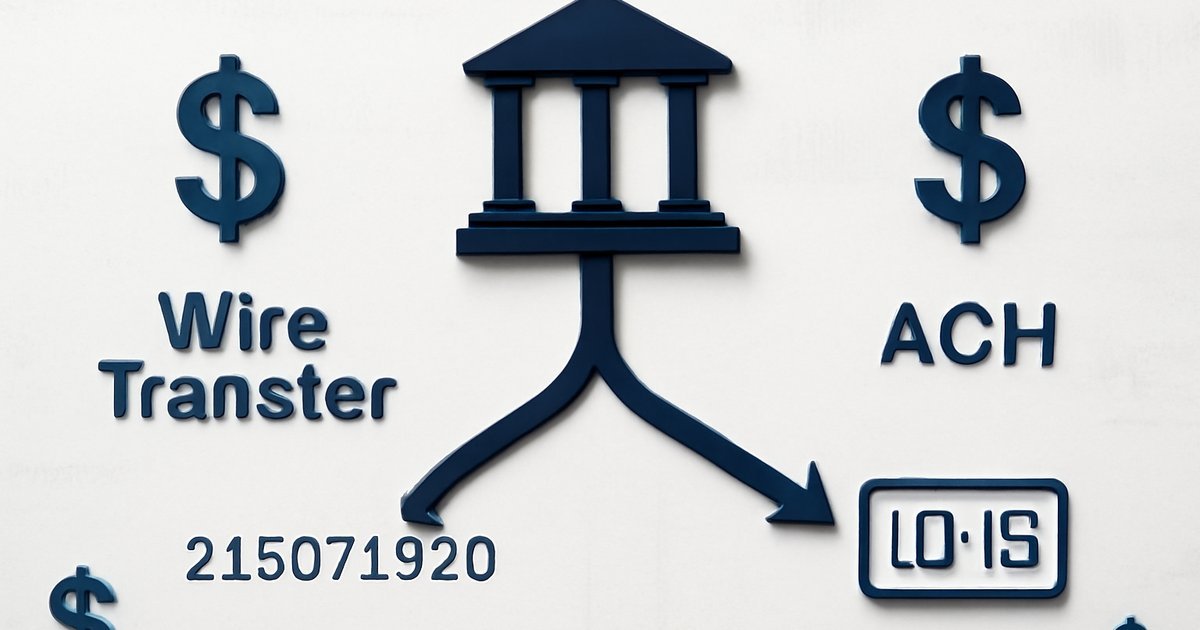
    Both wire transfers and ACH transfers move money electronically between bank accounts — but they run on completely different networks with very different rules.

    Wire Transfers

    A wire transfer is a direct, bank-to-bank electronic transfer that moves funds in real time (or near-real time) through networks like Fedwire or SWIFT. When you initiate a wire, your bank sends a message through the network instructing the receiving bank to credit a specific account. The money moves quickly — often within the same business day domestically, or 1–5 business days internationally.

    Wire transfers are irrevocable in most cases. Once the money leaves your account, it cannot be recalled without the recipient’s cooperation. This is a critical feature to understand before you hit send.

    ACH Transfers

    ACH stands for Automated Clearing House. It’s a batch-processing network managed by Nacha (formerly NACHA — the National Automated Clearing House Association) that bundles transactions together and processes them in groups throughout the day. Common examples include direct deposit paychecks, Social Security payments, bill autopay, and peer-to-peer transfers like Venmo or Zelle (which often use the ACH network on the backend).

    ACH transfers are generally reversible for a limited window, which gives both senders and recipients some protection — but also means the money isn’t truly "settled" immediately.

    Key Differences: Speed, Cost, and Limits

    According to Bankrate’s 2025 banking fee data, the average outgoing domestic wire transfer fee at a major US bank is $25–$35. Incoming wire fees typically run $15–$20. ACH transfers, by contrast, are free at most consumer banks and credit unions — though some charge a small fee (usually under $3) for same-day ACH processing.

    Speed Comparison

    • Domestic wire transfer: Same business day if submitted before the cutoff time (usually 2–4 PM ET). International wires: 1–5 business days.
    • Standard ACH: 1–3 business days. Most transactions initiated before the daily cutoff post by the next business day.
    • Same-day ACH: Available since 2016 for most transactions up to $1 million per transaction. Must be initiated early enough to hit the same-day processing window.

    Transaction Limits

    • Wire transfers: Limits vary by bank, but large transactions are generally not a problem. A $500,000 real estate wire is entirely normal through most banks, though additional verification may be required.
    • ACH transfers: Nacha raised the same-day ACH per-transaction limit to $1 million in 2022, making ACH viable for much larger transactions than it used to be. Standard ACH limits at consumer banks typically range from $2,500 to $25,000 per day depending on the institution.

    Reversibility

    • Wire transfers: Generally irrevocable once processed. If you send to the wrong account, recovering your money depends entirely on the goodwill of the recipient and their bank.
    • ACH transfers: Can be reversed within a defined window (typically 2 business days for returns, up to 60 days for unauthorized transactions under Nacha rules). This makes ACH safer in many consumer contexts.

    When to Use a Wire Transfer

    Wire transfers make the most sense in situations where speed is critical and the transaction amount is large enough that paying a $25–$35 fee is proportionally reasonable.

    Best Use Cases for Wire Transfers

    1. Real estate closings. Title companies and closing attorneys almost always require wire transfers for down payments and closing costs. A $20,000 down payment via wire often must arrive by a specific time on closing day. ACH’s 1–3 day delay could jeopardize your closing.
    2. Large business-to-business payments. When you’re paying a vendor $75,000 for equipment and they need confirmed funds before releasing the order, a wire provides certainty that ACH doesn’t.
    3. International transfers. While ACH is a domestic network, wire transfers via SWIFT can reach bank accounts in over 200 countries. If you’re paying an overseas supplier or sending money to family abroad, a wire (or a specialist like Wise or OFX) is often your only bank-to-bank option.
    4. Time-sensitive investments or escrow funding. When an investment deadline is today at 5 PM, you need the certainty of a wire.

    Thinking about your broader financial picture? If you’re wiring money for a home purchase, you’ll also want to understand how personal loans and financing options fit into your overall borrowing strategy.

    When to Use an ACH Transfer

    For the vast majority of everyday financial transactions, ACH is the smarter, cheaper choice. The Federal Reserve reports that ACH transfers processed over 31 billion transactions in 2024 — a number that reflects just how dominant this network has become for routine payments.

    Best Use Cases for ACH Transfers

    1. Direct deposit and payroll. Almost all US payroll runs on ACH. It’s reliable, free, and well-established.
    2. Bill autopay. Mortgage payments, utilities, subscriptions — ACH handles these automatically and without fees.
    3. Transferring money between your own accounts. Moving $5,000 from your checking to a high-yield savings account at another bank? ACH is perfect. There’s no fee and the 1–2 day delay rarely matters. (Check out our guide to savings account interest rates if you’re optimizing where your money sits.)
    4. Small business vendor payments. If your supplier accepts ACH and doesn’t need same-day funds, you’ll save $25–$35 per transaction compared to wiring.
    5. P2P payments. Apps like Zelle, Venmo, and Cash App often use ACH rails. Zelle in particular transfers directly between bank accounts and is free for most users.

    Step-by-Step: How to Send Each Type of Transfer

    How to Send a Wire Transfer

    1. Gather recipient information. You’ll need the recipient’s full legal name, their bank’s ABA routing number (9 digits), their account number, and for international wires, the bank’s SWIFT/BIC code and possibly an IBAN.
    2. Contact your bank. Most banks allow you to initiate wires online, by phone, or in person. Online is typically cheapest. Note the cutoff time for same-day processing — usually 2–4 PM ET.
    3. Verify the details carefully. Double-check the routing and account numbers. A single wrong digit can send your money to the wrong account — and recovery is not guaranteed.
    4. Confirm the fee. Ask explicitly what the outgoing and (if applicable) incoming wire fees will be. Some banks waive fees for premium account holders.
    5. Get the wire confirmation number. Save it. You’ll need this reference number if any issue arises.

    How to Send an ACH Transfer

    1. Log into your bank’s online portal or app. Look for "transfer," "send money," or "pay bills."
    2. Add the recipient’s bank account. You’ll need their routing number and account number. Your bank may send two small test deposits (micro-deposits) to verify the account, which takes 1–3 days.
    3. Enter the amount and choose standard or same-day. Select same-day ACH if you need faster delivery and your bank offers it (a small fee may apply).
    4. Review and confirm. Unlike wires, ACH has a brief window for cancellation if you catch an error quickly — but don’t rely on it. Confirm carefully before submitting.

    Costs, Fees, and Hidden Charges

    The IRS treats wire transfer fees as ordinary and necessary business expenses when they’re related to business transactions — meaning small business owners can generally deduct them. But that doesn’t make paying $30 per wire a good habit for routine payments.

    Typical Fee Ranges (2026)

    • Domestic wire (outgoing): $15–$35 at most major banks. Some online banks like Ally charge $0 for outgoing wires.
    • Domestic wire (incoming): $0–$20. Many banks charge the recipient to receive a wire.
    • International wire (outgoing): $25–$50 plus an exchange rate markup of 2–5%.
    • Standard ACH (outgoing): Free at nearly all consumer banks and credit unions.
    • Same-day ACH (outgoing): $0–$5 at most banks; some charge a percentage of the transfer amount.

    Hidden Costs to Watch For

    • Exchange rate markups on international wires. Your bank’s exchange rate is rarely the market (interbank) rate. The spread is where banks profit quietly. Services like Wise typically offer rates closer to the mid-market rate.
    • Correspondent bank fees on international wires. Multiple banks may handle an international wire in transit, each deducting a fee. The recipient may receive less than you sent.
    • Returned ACH fees. If an ACH transfer fails due to insufficient funds or incorrect account information, your bank may charge a returned item fee ($15–$35).

    Common Mistakes to Avoid

    1. Wiring money based on unverified instructions

    Business email compromise (BEC) scams are one of the FBI’s top financial fraud categories. Criminals hack into email accounts, monitor pending real estate or business transactions, and send fake "updated wire instructions" just before closing. The FBI’s Internet Crime Complaint Center (IC3) reported over $2.9 billion in BEC losses in 2023 alone. Always call the recipient directly using a phone number you already have — never one from a suspicious email — to verify wire instructions before sending.

    2. Sending an ACH when a wire is required

    If a title company or escrow agent requires "immediately available funds" by a specific time, ACH won’t cut it — even same-day ACH. Sending ACH when a wire is required can delay your real estate closing and potentially trigger contract penalties. Ask in advance what form of payment is required.

    3. Ignoring cutoff times

    Most banks have wire cutoff times between 2–4 PM ET. If you initiate a wire at 4:30 PM, it won’t process until the next business day. For time-sensitive transactions, confirm the cutoff time with your bank and act accordingly — especially around weekends and federal holidays.

    4. Not comparing alternatives for international transfers

    Bank international wires are often the most expensive way to send money abroad. Services like Wise, OFX, or Remitly can transfer the same amount for 60–80% less in fees and exchange rate markups. For regular international payments, this adds up significantly over time.

    5. Overlooking bank account verification for ACH

    Entering an incorrect account or routing number for an ACH transfer can result in a failed transaction, a returned item fee, and a delay of several business days. Always verify the exact numbers — and be aware that routing numbers can differ depending on the type of transaction (paper check vs. ACH).

    Alternatives to Consider

    Zelle

    Best for: Fast, free transfers between individuals at participating US banks.
    Pros: Instant or near-instant delivery, free, no app required for some banks, integrated into major bank apps.
    Cons: Limited to the US, maximum transfer limits (typically $500–$2,500 per day depending on your bank), transactions are generally not reversible.
    Bottom line: Excellent for splitting bills, paying contractors small amounts, or sending money to family. Not suitable for large business or real estate transactions.

    Wise (formerly TransferWise)

    Best for: International money transfers where you want to minimize fees and exchange rate markups.
    Pros: Mid-market exchange rates, transparent fees, transfers to 160+ countries, supports business accounts.
    Cons: Not instant (typically 1–2 business days), requires account setup, not integrated with your existing bank.
    Bottom line: One of the most cost-effective ways to send money internationally, potentially saving hundreds of dollars versus a bank wire on a $10,000+ transfer.

    Cashier’s Check

    Best for: Large local transactions where the recipient won’t accept personal checks but you want to avoid wire fees.
    Pros: Guaranteed funds (the bank backs it), widely accepted, typically only $8–$15 to obtain.
    Cons: Must be physically delivered or mailed, some fraud risk (counterfeit cashier’s checks exist), not suitable for remote or time-sensitive transactions.
    Bottom line: A cost-effective alternative to a wire for in-person transactions, such as buying a used car or paying a local contractor a large sum. Having the right checking account can make obtaining cashier’s checks cheaper or even free.

    Frequently Asked Questions

    Can I cancel a wire transfer after it’s been sent?

    In most cases, no — not once the wire has been processed. However, if you catch the error immediately (before the bank’s processing window closes), contact your bank right away. There’s a brief window where the wire might be recalled, but there’s no guarantee. This is why verifying all details before submitting is non-negotiable.

    Are wire transfers and ACH transfers safe?

    Both are regulated and generally safe when used correctly. Wire transfers are protected by federal banking regulations, but their irrevocability makes fraud recovery difficult. ACH transfers have stronger consumer protections under Nacha rules — you generally have 60 days to dispute an unauthorized ACH debit from your account. Neither method is immune to fraud if you’re careless with account information.

    Does the IRS track wire transfers and ACH transfers?

    Financial institutions are required to file Currency Transaction Reports (CTRs) for cash transactions over $10,000. Electronic transfers like wires and ACH are monitored under the Bank Secrecy Act, and banks may file Suspicious Activity Reports (SARs) for unusual patterns. The IRS does not automatically tax wire or ACH transfers — the tax treatment depends on the nature of the underlying transaction (income, gift, loan repayment, etc.).

    How much does it cost to receive a wire transfer?

    Many banks charge the recipient an incoming wire fee of $10–$20. Some premium or online bank accounts waive this fee. If you regularly receive wires (e.g., from clients or business partners), it’s worth choosing a bank account that waives incoming wire fees to avoid unnecessary costs.

    What’s the difference between same-day ACH and Zelle?

    Same-day ACH is a bank-initiated transfer that settles within the same business day through the ACH network — it’s primarily used for business payments and larger transfers. Zelle is a consumer-facing payment service backed by major US banks that typically delivers funds in minutes, using the ACH network on the backend with a real-time payment overlay. Zelle is faster for individuals but has lower limits; same-day ACH is better for business use with higher dollar amounts.

    Conclusion

    The choice between a wire transfer and an ACH transfer comes down to three factors: speed, amount, and cost. Use wire transfers when you need same-day certainty, the transaction is large, or the recipient requires guaranteed funds. Use ACH when you’re making routine payments, transferring between your own accounts, or want to avoid paying $25–$35 per transaction.

    For most day-to-day banking needs, ACH is the smarter default — it’s free, reliable, and increasingly fast. Wires remain indispensable for high-stakes, time-sensitive transactions like real estate closings and large business payments.

    Before your next significant transfer, take two minutes to verify the recipient’s details, confirm the appropriate method with your bank, and check whether an alternative like Zelle or Wise might serve you better. Small decisions about how you move money add up over time — and the right choice is almost always the one that costs you less while still meeting your timing needs.

    This article is for educational purposes only and does not constitute financial, tax, or investment advice. Always consult a licensed financial advisor, CPA, or attorney before making financial decisions.
  • Checking Accounts: How to Choose the Best One

    Checking Accounts: How to Choose the Best One

    Checking Accounts: How to Choose the Best One for Your Money

    The average American pays over $200 a year in unnecessary checking account fees — here’s how to stop that and find an account that actually works for you.

    Introduction

    According to a 2025 Bankrate survey, nearly 1 in 4 Americans is paying monthly maintenance fees on their primary checking account — fees that can quietly drain $100 to $300 or more from their balance every year. That’s money that could be growing in a savings or investment account instead.

    A checking account is the financial hub of your daily life. It’s where your paycheck lands, where your bills get paid, and where your debit card draws from every time you swipe. Yet most people open one without really comparing their options — and end up stuck with an account that costs them more than it should.

    In this guide, you’ll learn exactly how checking accounts work, what features actually matter, how to compare your options, and what common mistakes to avoid. Whether you’re thinking about switching banks or opening your first account, this breakdown will help you make a smarter decision for your financial life.

    What Is a Checking Account and How Does It Work?

    A checking account is a type of bank deposit account designed for everyday transactions. Unlike a savings account — which is meant to hold money over time — a checking account is built for frequent use: deposits, withdrawals, bill payments, and debit card purchases.

    When you deposit money into a checking account, the bank holds it and makes it available for you to spend. Most checking accounts come with a debit card tied directly to your balance, as well as the ability to write checks, set up direct deposit, and pay bills electronically through ACH transfers.

    The Federal Reserve’s 2024 Payments Study found that debit card transactions now account for more than 40% of all non-cash payments in the United States — making the checking account one of the most-used financial tools in the country.

    In most cases, checking accounts are insured by the FDIC (Federal Deposit Insurance Corporation) up to $250,000 per depositor, per bank. That means even if your bank fails, your money is protected up to that limit. You can learn more about how this works in our guide to FDIC Insurance: How Your Bank Deposits Are Protected.

    There are several types of checking accounts available to US consumers, including:

    • Traditional checking accounts — Offered by major banks and credit unions, usually with a branch and ATM network.
    • Free checking accounts — No monthly fee, though they may have fewer features.
    • Interest-bearing checking accounts — Pay a small amount of interest on your balance, though rates are typically low.
    • Online checking accounts — Offered by online-only banks, often with lower fees and higher perks.
    • Student or second-chance checking accounts — Designed for those just starting out or rebuilding after banking problems.

    Key Benefits of Choosing the Right Checking Account

    Choosing the right checking account isn’t just about avoiding fees — though that matters a lot. The right account can actively make your financial life easier and even help you build better habits.

    No monthly maintenance fees. According to Bankrate’s 2025 checking account survey, the average monthly maintenance fee at traditional banks is $15.33 — that’s $183.96 a year just to keep your account open. Many online banks and credit unions offer accounts with zero monthly fees and no minimum balance requirements.

    ATM access and reimbursements. If you use cash regularly, ATM access matters. Some online banks reimburse out-of-network ATM fees up to $10 to $15 per month, which can be a real advantage if you’re not near your bank’s ATMs.

    Overdraft protection options. Many banks now offer overdraft protection that links your checking account to a savings account or credit line — preventing declined transactions or bounced checks. Some online banks have even eliminated overdraft fees entirely.

    Early direct deposit. Several online banks and fintech-backed checking accounts allow you to receive your paycheck up to two days early when you set up direct deposit. For people living paycheck to paycheck, that timing can make a real difference.

    Cash back and rewards. A growing number of checking accounts now offer cash back on debit card purchases — typically 1% — which adds up over time for everyday spending.

    How to Choose a Checking Account: Step-by-Step

    Finding the right checking account comes down to matching the account’s features to how you actually use money. Here’s a practical approach:

    1. Audit your current banking habits. Do you use cash often or prefer card? Do you need in-person branch access? Do you frequently have a low balance? Honest answers here will narrow your options fast.
    2. Identify the fees you’re currently paying. Pull up three months of bank statements and add up every fee: monthly maintenance, ATM, overdraft, paper statement fees. That total is what you’re trying to eliminate or reduce.
    3. Decide whether you need a physical branch. If you often deposit cash or need in-person help, a traditional bank or credit union makes sense. If you’re comfortable banking digitally, an online bank will usually offer better terms.
    4. Compare minimum balance requirements. Some accounts waive monthly fees only if you maintain a minimum daily balance — often $1,500 to $2,500. If you can’t consistently meet that threshold, look for accounts with no minimum requirement.
    5. Check the ATM network. Look for banks with large ATM networks (Allpoint and MoneyPass have tens of thousands of locations across the US) or those that reimburse ATM fees.
    6. Review overdraft policies. The Consumer Financial Protection Bureau (CFPB) has pushed banks to reduce overdraft fees in recent years. Many banks now cap fees or offer opt-in overdraft protection. Understand what happens if you spend more than your balance before you open the account.
    7. Consider additional features. Zelle integration, mobile check deposit, bill pay, budgeting tools, and early direct deposit are all features worth comparing — especially if you rely on your bank’s app daily.
    8. Open and set up direct deposit. Once you’ve chosen an account, link your employer’s payroll system to the new account and move your automatic bill payments over. Most banks provide a pre-filled direct deposit form to make this easier.

    Costs, Fees, and Risks to Watch For

    Even accounts advertised as "free" can come with hidden costs. Here’s what to read carefully before you commit:

    Monthly maintenance fees. As noted earlier, these average over $15/month at major banks. They’re often waivable — but only if you meet requirements like maintaining a minimum balance or having direct deposit set up.

    Overdraft fees. Historically, overdraft fees averaged around $35 per transaction. While regulatory pressure has pushed many banks to lower or eliminate these fees, some traditional banks still charge them. Always ask about the overdraft policy upfront.

    Out-of-network ATM fees. These typically run $2.50 to $5 per transaction — and that’s on top of what the ATM operator charges. If you use cash frequently, this can add up to $100 or more per year.

    Minimum balance fees. Some accounts charge a separate fee if your daily balance falls below a set threshold — even if you already paid the monthly maintenance fee. Read the fee schedule carefully.

    Wire transfer fees. Sending or receiving domestic wire transfers typically costs $15 to $30 per transaction at traditional banks. If you make frequent transfers, look for accounts that reduce or waive these costs.

    Account closure fees. Some banks charge a fee if you close an account within 90 to 180 days of opening it. If you’re switching banks, be aware of this before you make the move.

    Risk of ChexSystems reports. If you’ve had past banking issues — overdrafts left unpaid, accounts closed for cause — your record may appear in ChexSystems, a banking reporting system similar to a credit report. This can make it harder to open new accounts. Second-chance checking accounts are designed specifically for people in this situation.

    Common Mistakes to Avoid When Opening a Checking Account

    Even financially savvy people make avoidable mistakes when it comes to their checking account. Here are the most costly ones:

    Mistake 1: Ignoring the fee schedule. Banks are legally required to disclose their fees, but that doesn’t mean they make it easy to find them. Many people open accounts without ever reading the full fee schedule and end up surprised by charges they didn’t expect. Always ask for — or look up — the complete fee disclosure before opening any account.

    Mistake 2: Not setting up direct deposit to waive fees. Most major banks waive their monthly maintenance fee if you have direct deposit into the account. But many customers skip this step and keep paying the fee unnecessarily. If your employer offers direct deposit, linking it to your checking account is almost always worth doing.

    Mistake 3: Keeping too much money in a non-interest-bearing checking account. Your checking account is a spending account — not a savings vehicle. Keeping $20,000 in a checking account that earns 0% interest while high-yield savings accounts are paying 4% or more (as of recent Federal Reserve rate environments) means you’re leaving real money on the table.

    Mistake 4: Opting into overdraft coverage without understanding the cost. When you opt into overdraft coverage, the bank processes transactions even when you don’t have enough funds — and charges you a fee. For many people, having the transaction declined is a better outcome than paying a $35 overdraft fee. Know what you’re agreeing to.

    Mistake 5: Ignoring smaller banks and credit unions. Many consumers default to the biggest national banks out of familiarity, but credit unions and regional banks frequently offer better terms — lower fees, better customer service, and more flexibility. Membership requirements for credit unions have also become much easier to meet in recent years.

    Alternatives to a Traditional Checking Account

    If a standard checking account doesn’t fit your needs, there are a few alternatives worth considering:

    1. Online bank checking accounts. Banks like Ally, SoFi, and Discover offer checking accounts with no monthly fees, no minimum balance requirements, and sometimes interest on your balance. The main tradeoff is no physical branch access and — depending on the bank — limited cash deposit options. For most people who live digitally, this is the best all-around option.

    2. Credit union share draft accounts. These are the credit union equivalent of a checking account. Credit unions are member-owned nonprofits, which means they typically charge lower fees and offer better interest rates than for-profit banks. The National Credit Union Administration (NCUA) insures deposits up to $250,000 — the same as the FDIC. You can find a credit union at MyCreditUnion.gov.

    3. Prepaid debit cards. If you don’t qualify for a traditional checking account — or prefer to limit spending to what you’ve loaded — a prepaid debit card can serve as a functional alternative. They don’t build credit history and may charge reload fees, but they’re accessible to nearly anyone. This is a common choice for people working to rebuild their banking history before qualifying for a standard account.

    If you’re managing a money market account alongside your checking, it’s worth understanding how those work too. Our guide on Money Market Accounts: How They Work and Are They Worth It? breaks down the key differences and when each makes sense.

    Frequently Asked Questions

    Q: How many checking accounts should I have?
    Most people do fine with one primary checking account for daily spending and one savings account for goals and emergencies. Some people open a second checking account to separate business and personal spending, or to use a different bank’s ATM network. Generally speaking, more than two checking accounts can create confusion without adding much benefit.

    Q: Can I open a checking account with bad credit?
    Yes — most banks don’t pull your credit report when you apply for a checking account. However, they may check ChexSystems, which tracks past banking problems. If you’ve had unpaid overdrafts or accounts closed for cause, you may be denied. Second-chance checking accounts are specifically designed to help people in this situation get back into the banking system.

    Q: Is my money safe in a checking account?
    In most cases, yes. As long as your bank is FDIC-insured — and the vast majority of US banks are — your deposits are protected up to $250,000 per depositor, per bank, per ownership category. Credit union accounts are insured by the NCUA under the same $250,000 limit. To verify your bank’s insurance status, use the FDIC’s BankFind tool at fdic.gov.

    Q: What’s the difference between a checking account and a savings account?
    A checking account is designed for frequent transactions — daily spending, bill payments, and payroll. A savings account is designed to hold money you don’t plan to spend immediately, and it typically earns interest. The IRS and Federal Reserve don’t limit how many transactions you can make from a checking account, but savings accounts were historically limited to six withdrawals per month (a rule the Fed suspended in 2020, though some banks still apply it).

    Q: How do I switch checking accounts without missing bill payments?
    The key is to run both accounts in parallel for at least 30 days. Open the new account, set up direct deposit, then gradually move your automatic payments over one by one. Once all payments have successfully cleared from the new account for at least one billing cycle, you can safely close the old one. Many banks now offer account-switching services that help automate this process.

    Conclusion

    Your checking account is the financial center of your daily life — and choosing the wrong one can silently cost you hundreds of dollars every year in unnecessary fees. The good news is that better options exist at nearly every income level and banking preference.

    Start by auditing what you’re currently paying in fees. Then compare two or three alternatives — whether that’s an online bank, a credit union, or a no-fee checking account at a traditional bank. Pay attention to the overdraft policy, ATM access, and minimum balance requirements before you commit.

    If you’re also thinking about where to keep savings you don’t need to access daily, pairing your checking account with a high-yield savings account or money market account can make your money work harder. And if you’re planning longer-term, accounts like a Roth IRA can complement your banking strategy for retirement goals.

    The right checking account won’t make you rich — but the wrong one will quietly make you poorer. A few hours of research now can save you real money for years to come.

    This article is for educational purposes only and does not constitute financial, tax, or investment advice. Always consult a licensed financial advisor, CPA, or attorney before making financial decisions.
  • Money Market Accounts: How They Work and Are They Worth It?

    Money Market Accounts: How They Work and Are They Worth It?

    Money Market Accounts: How They Work and Are They Worth It?

    Discover how money market accounts can earn you significantly more than a traditional checking account — often 10 to 15 times more interest.

    Introduction

    According to the Federal Reserve’s 2025 Consumer Finance Report, the average American keeps more than $12,000 sitting in a traditional checking or basic savings account earning next to nothing. Meanwhile, money market accounts (MMAs) at online banks and credit unions were offering rates well above 4% APY at their peak — and many still hover well above what brick-and-mortar banks pay.

    If you’ve heard the term "money market account" but aren’t quite sure how it differs from a regular savings account, a CD, or a money market fund, you’re not alone. The terminology can be confusing, and the differences are more significant than most people realize.

    In this guide, you’ll learn exactly what a money market account is, how it works, who it’s best suited for, what fees and risks to watch out for, and whether it deserves a place in your overall banking strategy. By the end, you’ll have a clear, practical picture of whether an MMA is the right move for your money.

    What Is a Money Market Account and How Does It Work?

    A money market account (MMA) is a type of deposit account offered by banks and credit unions that typically combines features of both a savings account and a checking account. It earns interest like a savings account, but often comes with a debit card and limited check-writing privileges — making it slightly more accessible than a traditional savings product.

    MMAs are federally insured up to $250,000 per depositor, per institution, through the FDIC (for banks) or the NCUA (for credit unions). That makes them one of the safest places to park your cash, particularly for emergency funds, short-term savings goals, or money you expect to need within one to three years.

    Here’s the key mechanism: banks take your MMA deposits and invest them in short-term, low-risk instruments like Treasury bills and commercial paper. Because of this investment activity, they can offer higher interest rates than standard savings accounts. The rate is variable, meaning it can go up or down based on the federal funds rate set by the Federal Reserve.

    It’s also important to distinguish a money market account from a money market fund. A money market fund is an investment product sold through brokerages — it is not FDIC-insured. Many investors confuse the two, which can lead to unexpected risk exposure.

    Key Benefits of Money Market Accounts

    The FDIC reported that the national average interest rate on regular savings accounts was around 0.45% APY in mid-2025, while top-tier money market accounts were offering rates between 4.00% and 5.00% APY at competitive institutions. That gap can translate into hundreds of dollars in additional interest every year.

    Here are the core advantages that make MMAs worth considering:

    • Higher Interest Rates: Compared to standard savings accounts, MMAs frequently offer substantially better yields, especially at online banks where overhead costs are lower.
    • FDIC/NCUA Insurance: Your money is protected up to $250,000 — a level of security you won’t get with money market funds or other investment products.
    • Liquidity and Flexibility: Unlike certificates of deposit (CDs), MMAs don’t lock your money up for a fixed term. You can access your funds when you need them.
    • Check-Writing and Debit Access: Many MMAs come with a debit card or limited check-writing ability, giving you more day-to-day flexibility than a standard savings account.
    • Tiered Interest Structure: Some institutions reward higher balances with progressively better rates, incentivizing you to consolidate savings.

    Consider this real-world example: If you keep $25,000 in a traditional savings account earning 0.45% APY, you’d earn roughly $112.50 in interest over a year. The same $25,000 in a money market account earning 4.25% APY would generate approximately $1,062.50 — a difference of nearly $950 annually.

    How to Open and Use a Money Market Account: Step-by-Step

    Getting started with an MMA is straightforward, but a few steps will help you avoid common pitfalls and get the most out of your account.

    1. Determine your goal: Are you building an emergency fund, saving for a home down payment, or parking business cash? Knowing your purpose helps you choose the right account features and minimum balance requirements.
    2. Compare rates and minimums: Use comparison tools on sites like Bankrate or NerdWallet to find current APYs. Look beyond the headline rate — check whether it requires a minimum balance to unlock the advertised rate.
    3. Check minimum deposit requirements: Many MMAs require anywhere from $500 to $10,000 to open. Some online banks have eliminated minimums entirely. Read the fine print before applying.
    4. Verify FDIC or NCUA insurance: Use the FDIC’s BankFind tool at fdic.gov to confirm any bank you’re considering is federally insured. Never skip this step.
    5. Apply online or in-branch: Most banks allow online applications. You’ll typically need your Social Security number, a government-issued ID, and an initial deposit from a linked bank account.
    6. Set up automatic transfers: Once your account is open, automate regular contributions from your checking account to build your balance consistently — and ensure you maintain any required minimums.
    7. Monitor your rate: MMA rates are variable. Set a calendar reminder every three to six months to check whether your institution is still competitive and shop alternatives if needed.

    If you’re also managing debt alongside your savings, it’s worth reading our guide on Debt Consolidation: How to Pay Off Debt Faster to understand the balance between paying down high-interest debt and building liquid savings.

    Costs, Fees, and Risks to Know Before You Open One

    Money market accounts are low-risk — but "low risk" doesn’t mean "no cost." According to CFPB guidance, account fees remain one of the biggest silent drains on consumer savings. Here’s what to watch for:

    • Monthly Maintenance Fees: Some institutions charge $10 to $25 per month if you fall below a minimum balance threshold. A $15/month fee on a low-balance account can completely offset any interest earned.
    • Excess Transaction Fees: Historically, Regulation D limited savings-type accounts to six withdrawals per month. While the Fed suspended this rule in 2020 and many banks relaxed it, some institutions still enforce transaction limits and charge $10 to $15 per excess withdrawal.
    • Minimum Balance Penalties: Falling below the required minimum — even briefly — can trigger a fee or drop your rate to a lower tier. Track your balance carefully.
    • Variable Rate Risk: Because MMA rates track the federal funds rate, your yield can decrease when the Fed cuts rates. This is not a principal risk (your deposited money doesn’t decrease), but your interest income can fall significantly over time.
    • Inflation Risk: Even a 4% yield may not fully keep pace with inflation in a high-inflation environment, meaning your real purchasing power could still erode slowly.
    • Opportunity Cost: If you’re keeping large amounts in an MMA that you won’t need for five or more years, you may be leaving significant long-term growth on the table compared to a diversified investment portfolio.

    For context on how MMAs compare to another popular low-risk savings vehicle, see our detailed breakdown: CD Accounts vs. High-Yield Savings: Which Pays More?

    Common Mistakes to Avoid With Money Market Accounts

    Even with a simple financial product, there are ways to leave money on the table — or inadvertently cost yourself. Here are the most frequent errors and how to sidestep them.

    Mistake #1: Ignoring the fine print on tiered rates. Many MMAs advertise an attractive APY that only applies to balances above a certain threshold — say, $25,000 or more. If your balance is $5,000, you may actually earn a much lower rate. Always verify which rate tier your balance falls into before assuming you’re getting the best deal.

    Mistake #2: Confusing a money market account with a money market fund. A money market fund is an investment product, not a deposit account. It is not FDIC-insured and carries market risk. Many investors — especially those new to brokerage platforms — accidentally move savings into a money market fund believing their money has the same protection as a bank account. It does not.

    Mistake #3: Setting it and forgetting it without rate monitoring. MMA rates are variable. An institution that offered 4.75% APY when you opened your account may have dropped to 2.50% six months later — quietly. Set a recurring reminder to compare your current rate against competing institutions at least quarterly. Rate shopping takes 15 minutes and can be worth hundreds of dollars annually.

    Mistake #4: Using an MMA to hold long-term investment money. An MMA is an excellent tool for cash you’ll need within one to three years. But if you’re accumulating money for retirement or a goal 10-plus years away, keeping it in an MMA means you’re almost certainly underperforming what a diversified investment approach could provide. Make sure your MMA serves a defined, short-to-medium-term purpose.

    Mistake #5: Opening multiple MMAs to chase rates without tracking fees. Some savers open accounts at three or four different banks chasing the highest rates. This can work, but if each account has a minimum balance requirement and monthly fee risk, the administrative complexity can outweigh the marginal rate difference.

    Alternatives to Consider

    A money market account isn’t the only option for safe, interest-bearing savings. Depending on your timeline, tax situation, and liquidity needs, one of these alternatives might serve you better.

    1. High-Yield Savings Accounts (HYSAs)
    HYSAs, typically offered by online banks, function very similarly to MMAs and often carry comparable or even higher rates. The main difference: HYSAs usually have no check-writing privileges and may have fewer features. They tend to have lower or no minimum balance requirements, making them accessible for savers just starting out. If you don’t need check-writing access, an HYSA may offer equal yield with fewer strings attached.

    Pros: Low minimums, FDIC-insured, competitive rates
    Cons: No check-writing, rate is also variable

    2. Certificates of Deposit (CDs)
    CDs lock your money for a fixed term — typically three months to five years — in exchange for a guaranteed rate that won’t change during that term. If you know you won’t need the money for 12 to 24 months, a CD can be advantageous because it locks in today’s rate. The tradeoff: early withdrawal penalties can be steep, often equivalent to three to six months of interest.

    Pros: Fixed, predictable yield; FDIC-insured
    Cons: No liquidity without penalty, opportunity cost if rates rise

    3. Treasury Bills (T-Bills)
    For savers comfortable with a brokerage account, short-term U.S. Treasury bills (four-, eight-, thirteen-, and twenty-six-week maturities) offer competitive yields that are exempt from state and local income tax. This tax advantage can make T-bills more attractive than an MMA for high-income earners in high-tax states. You can purchase T-bills directly through TreasuryDirect.gov with no fees.

    Pros: State/local tax exempt, backed by U.S. government, competitive rates
    Cons: Less liquid than an MMA, requires brokerage or TreasuryDirect account, no FDIC label (though arguably safer)

    For savers who are also thinking about their broader financial plan, our guide on How to Create a Monthly Budget That Actually Works can help you figure out exactly how much liquid cash you should keep in an MMA versus investing or paying down debt.

    Frequently Asked Questions

    Q: Is a money market account the same as a money market fund?
    No — and this distinction is critical. A money market account is a deposit account at a bank or credit union, insured by the FDIC or NCUA up to $250,000. A money market fund is an investment product sold through brokerage firms. It is not federally insured and carries a (generally small but real) risk of losing value. Always confirm which type you’re dealing with before depositing funds.

    Q: How much should I keep in a money market account?
    Generally speaking, most financial planners suggest using an MMA to hold your emergency fund — typically three to six months of living expenses — plus any savings earmarked for short-term goals within one to three years. Money you won’t need for five or more years is generally better served in a diversified investment account.

    Q: Are money market account earnings taxable?
    Yes. Interest earned in a money market account is considered ordinary income by the IRS and is taxable at your marginal federal income tax rate. Your bank will issue a Form 1099-INT at year-end for any interest over $10. Depending on your state, this interest may also be subject to state income tax.

    Q: Can I lose money in a money market account?
    In a federally insured MMA, you cannot lose your principal — as long as your balance stays within FDIC or NCUA coverage limits ($250,000 per depositor, per institution). Your interest rate can decrease, but the dollars you deposited are protected. This protection does not apply to money market funds.

    Q: What’s the minimum balance required to open a money market account?
    It varies widely. Traditional banks often require $1,000 to $10,000 to open an MMA and may require an ongoing minimum to avoid fees or access the best rate. Many online banks have reduced minimums to $0 to $500. Always compare the minimum balance requirement alongside the advertised APY to determine the true cost and benefit for your situation.

    Conclusion

    Money market accounts occupy a valuable middle ground in personal finance: they’re safer than investments, significantly more rewarding than traditional savings accounts, and more flexible than CDs. For most working adults, an MMA makes excellent sense as a home for your emergency fund or short-term savings goals — provided you choose an institution with competitive rates, low fees, and strong FDIC or NCUA coverage.

    Your actionable next step: use a rate comparison tool like Bankrate or NerdWallet to identify the top three MMA offers available to you today. Compare the advertised APY, the minimum balance to earn that rate, and any monthly fees. Then take 20 minutes to open an account and set up an automatic monthly transfer. Small, consistent moves with your banking strategy can add up to thousands of dollars in additional earnings over time.

    This is for educational purposes — consult a licensed financial advisor for personalized guidance.


    Financial Disclaimer: This article is for educational purposes only and does not constitute financial, tax, or investment advice. Always consult a licensed financial advisor, CPA, or attorney before making financial decisions.