Investors who switched to low-cost index funds saved an average of $500,000 more over a 30-year career compared to those in actively managed funds — according to Vanguard research.
Why Index Funds Deserve Your Attention
Nearly 55% of American households own stocks in some form, yet millions of working adults still pay high fees for actively managed funds that, in most cases, underperform the market over a 10-year period. According to the S&P Dow Jones Indices SPIVA report, more than 90% of actively managed large-cap funds failed to beat the S&P 500 over a 20-year window.
If you’ve been sitting on the sidelines, unsure how to invest your savings without picking individual stocks or handing everything to an expensive advisor, index fund investing may be the most practical and evidence-backed strategy available to everyday Americans.
In this guide, you’ll learn exactly what index funds are, how they work, the real costs involved, and how to get started — even if you’re starting with a few hundred dollars. This is for educational purposes — consult a licensed financial advisor for personalized guidance.
What Is an Index Fund and How Does It Work?
An index fund is a type of investment fund — either a mutual fund or an ETF (exchange-traded fund) — designed to replicate the performance of a specific market index, such as the S&P 500, the Dow Jones Industrial Average, or the Russell 2000.
Instead of a portfolio manager handpicking stocks (which costs money and rarely outperforms), an index fund simply buys all — or a representative sample — of the stocks in its target index. When the index goes up, your fund goes up. When it goes down, your fund goes down. No guesswork, no expensive stock-picking.
Here’s a simple way to picture it: the S&P 500 tracks the 500 largest publicly traded U.S. companies. An S&P 500 index fund owns a tiny slice of all 500 of those companies. When you invest in that fund, you own a proportional share of Apple, Microsoft, Amazon, and hundreds of others — all in one purchase.
Index funds are built on a passive investing philosophy. Passive investing means you’re not trying to beat the market — you’re trying to match it. Over long periods, that approach has consistently outperformed the majority of active strategies, largely because of lower costs.
Key Benefits of Index Fund Investing
According to Morningstar’s 2025 fund fee study, the average expense ratio for passive index funds is just 0.06%, compared to 0.68% for actively managed funds. That gap may sound small, but compounded over decades, it’s enormous.
1. Lower Costs, Higher Returns
Fees eat returns. A 1% annual fee on a $100,000 portfolio can cost you over $300,000 in lost growth over 30 years, assuming a 7% average annual return. Index funds typically charge between 0.03% and 0.20% per year — a fraction of what active funds charge.
2. Built-In Diversification
Buying one S&P 500 index fund instantly diversifies your money across 500 companies spanning multiple industries. You’re not betting on a single stock or sector — you’re betting on the broad U.S. economy. In most cases, this dramatically reduces the risk of catastrophic loss from any one company failing.
3. Tax Efficiency
Because index funds rarely buy and sell holdings, they generate fewer taxable events. Actively managed funds often trigger capital gains distributions every year — meaning you owe taxes even if you didn’t sell your shares. Index funds held in taxable brokerage accounts tend to be significantly more tax-efficient.
4. Simplicity and Transparency
You always know what you own. Every S&P 500 index fund holds the same 500 companies in roughly the same proportions. There are no surprises, no black-box strategies, and no need to monitor a manager’s every decision.
How to Start Investing in Index Funds: Step-by-Step
The Bureau of Labor Statistics reports that median weekly earnings for full-time U.S. workers reached $1,165 in early 2026 — meaning most working adults have some capacity to invest, even if it starts small. Here’s how to begin.
Step 1: Choose Your Account Type
Before you buy a single fund, decide where you’ll hold it. Your account type determines your tax treatment:
- 401(k) or 403(b): Employer-sponsored retirement accounts. Contributions are pre-tax in traditional plans; Roth options use after-tax dollars. In 2026, the IRS contribution limit is $23,500 for employees under 50, and $31,000 for those 50 and older (including catch-up contributions).
- Roth IRA or Traditional IRA: Individual retirement accounts you open yourself. The 2026 IRA contribution limit is $7,000 per year ($8,000 if you’re 50+). A Roth IRA offers tax-free growth and withdrawals in retirement, making it a powerful vehicle for index fund investing.
- Taxable Brokerage Account: No contribution limits, but gains are taxed. Best used after maxing out tax-advantaged accounts.
Step 2: Pick a Brokerage
Open an account with a reputable, low-cost brokerage. Vanguard, Fidelity, and Charles Schwab are the most widely recommended for index fund investors. All three offer zero-commission trades and access to funds with expense ratios as low as 0.03%. Fidelity even offers zero-expense-ratio index funds for its own fund family.
Step 3: Select Your Index Funds
For most beginners, a simple two- or three-fund portfolio covers everything you need:
- U.S. Total Market Fund (e.g., VTSAX, FZROX): Covers the entire U.S. stock market — over 3,500 companies.
- International Stock Index Fund (e.g., VXUS, FZILX): Adds exposure to developed and emerging markets outside the U.S.
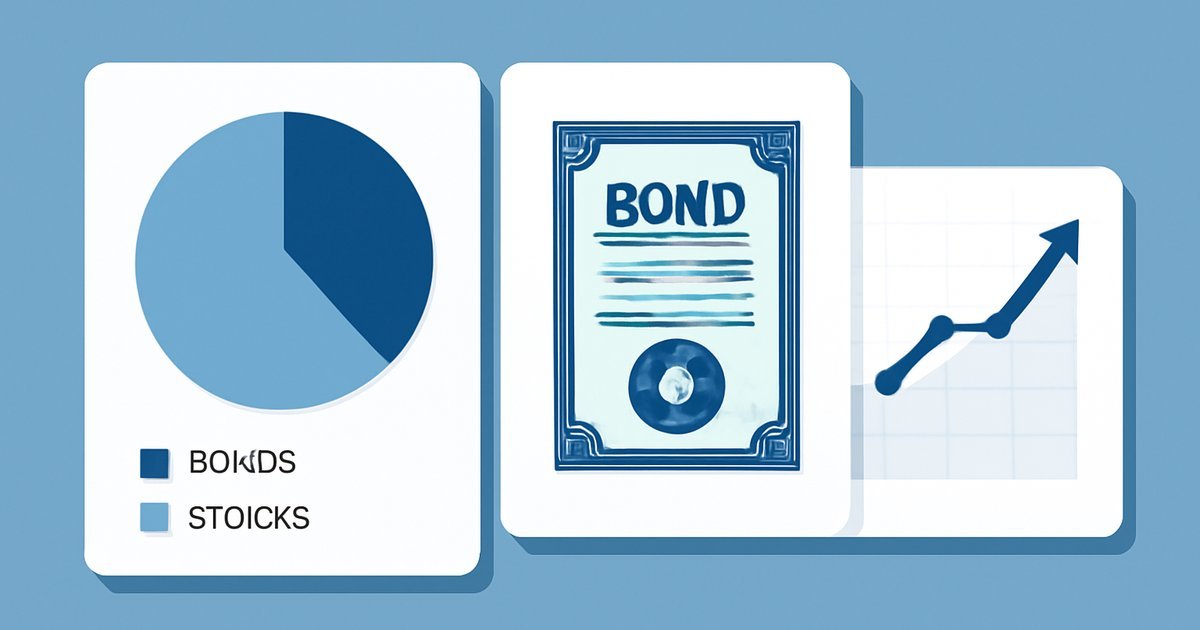
- U.S. Bond Index Fund (e.g., VBTLX, FXNAX): Provides stability and income, especially important as you approach retirement.
Depending on your age and risk tolerance, a common rule of thumb is to hold your age in bonds — so a 40-year-old might keep 40% bonds and 60% stocks. That said, many younger investors hold 90–100% stocks for maximum growth potential over long horizons.
Step 4: Set Up Automatic Contributions
Automate your investing. Set up a recurring transfer from your checking account to your brokerage on a weekly or monthly basis. This strategy — known as dollar-cost averaging — means you buy more shares when prices are low and fewer when prices are high, smoothing out volatility over time.
Step 5: Rebalance Annually
Once a year, review your allocation. If stocks have surged, your portfolio may have drifted from your target mix. Rebalancing — selling a bit of what’s grown and buying what’s lagged — keeps your risk level in check. Most brokerages offer automatic rebalancing tools.
Costs, Fees, and Risks to Understand
Index funds are low-cost, but they’re not free — and they’re not risk-free. The Federal Reserve’s 2025 Household Financial Stability report notes that many Americans underestimate investment risk when markets are calm, leading to panic selling during downturns.
Expense Ratios
This is the annual fee you pay, expressed as a percentage of your investment. A 0.03% expense ratio on a $50,000 portfolio costs you $15 per year. Compare that to a 1% fee on the same amount — $500 per year. Over decades, that difference is staggering.
Market Risk
Index funds can and do lose value. The S&P 500 dropped approximately 34% in early 2020 and roughly 19% in 2022. If you need money in the next 1–3 years, it should not be in stock index funds. These are long-term vehicles — generally speaking, they’re most appropriate for money you won’t need for at least five years.
Tracking Error
Most index funds closely mirror their benchmark, but not perfectly. A small gap — called tracking error — exists due to fund expenses and trading mechanics. In high-quality funds, this is typically under 0.10% annually.
Tax Implications in Taxable Accounts
In a taxable brokerage account, you’ll owe capital gains taxes when you sell shares at a profit. Long-term gains (assets held over one year) are taxed at 0%, 15%, or 20% depending on your income. Short-term gains are taxed as ordinary income. Holding funds in tax-advantaged accounts like a Roth IRA eliminates this concern during the accumulation phase.
Common Mistakes to Avoid
Even simple index fund investing can go wrong. Here are the most costly mistakes beginners make.
Mistake 1: Checking Your Portfolio Daily
Daily market monitoring leads to emotional decision-making. Studies from Vanguard show that investors who trade frequently underperform those who hold steady by an average of 1.5% per year. Set your allocation, automate contributions, and check in quarterly at most.
Mistake 2: Panic Selling During Market Downturns
The worst thing you can do with an index fund is sell during a crash. Investors who sold during the 2020 COVID crash and waited on the sidelines missed one of the fastest recoveries in stock market history — the S&P 500 recovered all losses within five months. Staying invested is the strategy.
Mistake 3: Ignoring Tax-Advantaged Accounts First
Many beginners open a taxable brokerage account before maxing out their 401(k) or IRA. This is generally a mistake. Tax-advantaged accounts let your money grow tax-deferred or tax-free, which dramatically compounds your wealth over time. Always prioritize these accounts, especially if your employer offers a 401(k) match — that’s free money.
Mistake 4: Choosing High-Fee Funds Accidentally
Not all index funds are created equal. Some funds marketed as “index funds” carry expense ratios above 0.50% — still lower than actively managed funds, but far above what you should pay. Always check the expense ratio before buying. Anything above 0.20% for a broad market index fund deserves scrutiny.
Mistake 5: Over-Diversifying With Too Many Funds
Buying 15 different index funds doesn’t make you more diversified — it makes you confused and may lead to overlapping holdings. A two- or three-fund portfolio is genuinely sufficient for most investors. Simplicity is a feature, not a limitation.
Alternatives to Consider
Index funds aren’t the only way to build long-term wealth. Depending on your goals and situation, these alternatives may complement or substitute your index fund strategy.
1. ETFs (Exchange-Traded Funds)
Pros: ETFs track indexes just like index mutual funds but trade on stock exchanges throughout the day. They often have lower minimum investments (sometimes just the price of one share) and can be more flexible for taxable accounts.
Cons: Buying and selling incurs bid-ask spreads, and some investors overtrade ETFs due to their liquidity. Generally speaking, ETFs and index mutual funds are near-identical for long-term investors — your brokerage’s offerings should guide your choice.
2. Target-Date Funds
Pros: These all-in-one funds automatically shift from aggressive (more stocks) to conservative (more bonds) as you approach your target retirement year. Perfect for investors who want truly hands-off management.
Cons: Expense ratios are slightly higher than single index funds, and you give up control over your asset allocation. Available in most 401(k) plans. Learn more about retirement income strategies as you get closer to your target date.
3. Robo-Advisors
Pros: Platforms like Betterment and Wealthfront build and automatically rebalance diversified portfolios of index funds for you. They typically charge 0.25% annually — reasonable for the automation and tax-loss harvesting features they provide.
Cons: You pay a layer of fees on top of the underlying fund fees. Investors comfortable managing their own accounts can skip this cost entirely. Consider reading about eliminating high-interest debt before committing large sums to any investment strategy.
Frequently Asked Questions
How much money do I need to start investing in index funds?
Very little. Fidelity’s zero-expense-ratio index funds have no minimum investment. Vanguard’s Admiral Shares require a $3,000 minimum, but Vanguard ETF versions of those same funds can be purchased for the price of a single share — sometimes under $100. Many brokerages also offer fractional shares, letting you invest with as little as $1.
Are index funds safe?
They’re not insured like bank accounts (which are FDIC-insured up to $250,000), and they can lose value. However, broad market index funds have historically recovered from every downturn in U.S. history. The risk is real but manageable for investors with a long time horizon — generally 10 years or more.
How do index funds compare to savings accounts?
High-yield savings accounts currently offer around 4–5% APY and are FDIC-insured. Index funds have historically returned roughly 7–10% annually before inflation over long periods — but with significant short-term volatility. Index funds are for long-term goals; savings accounts are for emergency funds and short-term needs. Check out how to reduce bank fees on your savings to maximize every dollar.
Should I invest in index funds if I have debt?
It depends on the interest rate. High-interest debt — especially credit cards charging 20–29% APR — should typically be paid off before investing aggressively. Low-interest debt like a mortgage at 4–6% may be worth carrying while you invest, since historical index fund returns have exceeded that rate over most long periods. This is a nuanced decision — a financial advisor can help you evaluate your specific situation.
Do index funds pay dividends?
Yes. Most broad market index funds distribute dividends quarterly, collected from the dividend-paying stocks in the index. In a tax-advantaged account like an IRA, those dividends reinvest automatically without tax consequences. In a taxable account, qualified dividends are taxed at the capital gains rate — 0%, 15%, or 20% depending on your income bracket.
Final Takeaways
Index fund investing isn’t glamorous — and that’s exactly the point. It’s a disciplined, low-cost, evidence-backed approach to building real wealth over time. The math is clear: lower fees, broad diversification, and consistent contributions outperform most active strategies over 10, 20, and 30-year horizons.
Your most important next steps are straightforward: open a tax-advantaged account if you haven’t already, choose a low-cost broker, select a simple index fund portfolio, and automate your contributions. Then let time and compounding do the heavy lifting.
The best time to start was ten years ago. The second-best time is today.
This article is for educational purposes only and does not constitute financial, tax, or investment advice. Always consult a licensed financial advisor, CPA, or attorney before making financial decisions.